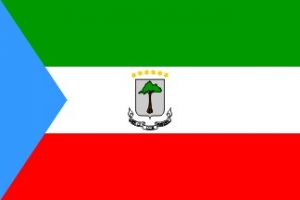

Equatorial Guinea is located in the central and western part of Africa, bordering the Atlantic Ocean to the west, Cameroon to the north, and Gabon to the east and south. The coastline is 482 kilometers long. It has a tropical rainforest climate with an average annual temperature of 24 to 26℃.
Since 1987, Equatorial Guinea has implemented an economic restructuring plan. After the development of oil in 1991, the economy has taken a turn for the better. From 1997 to 2004, the average annual economic growth rate reached 31.9%. In 2012, the per capita GDP exceeded 20,000 US dollars, making it one of the fastest growing African countries.
In 2007, Equatorial Guinea formulated the National Economic and Social Development Vision Plan for 2008-2020. While strengthening the development of the oil and gas industry, it fully launched the construction of infrastructure such as transportation, communications, electricity and health, promoted economic diversification, and planned to build it into an emerging country in 2020. In 2014, Equatorial Guinea held the first economic diversification conference, officially launching the economic diversification process, focusing on the development of five strategic industries such as agriculture and animal husbandry, fisheries, petrochemicals and mining, tourism, and financial services. The third national economic conference was held in 2019, and the "2019-2022 Economic Recovery Agenda" was launched. It will vigorously develop the oil and gas industry as well as non-oil industries such as industry, agriculture and fisheries, tourism, information and communication technology, and financial services, strengthen people's livelihood construction, and improve the business environment.
China and Equatorial Guinea established diplomatic relations on October 15, 1970. Since then, the relationship between the two countries has developed smoothly. The statistical data of bilateral trade between China and Equatorial Guinea in the past five years are as follows:
| 2016 | 2017 | 2018 | 2019 | 2020 | |
| Total import and export volume | 7.8 | 16.5 | 22.8 | 18.4 | 12.7 |
| Imported from China | 6.3 | 14.8 | 21.4 | 17.2 | 11.5 |
| China export | 1.5 | 1.7 | 1.4 | 1.2 | 1.2 |
Unit: US$100 million
China's main export categories to Equatorial Guinea include: motors, electrical, audio-visual equipment and their parts and accessories; steel products; boilers; vehicles and parts and accessories; furniture; rubber and its products; building materials, etc. The main categories of imports from Equatorial Guinea include: mineral fuels, mineral oils and their products; wood and wood products, charcoal; salt, sulfur, soil and stone; lime and cement, etc.